 Sakshi Singh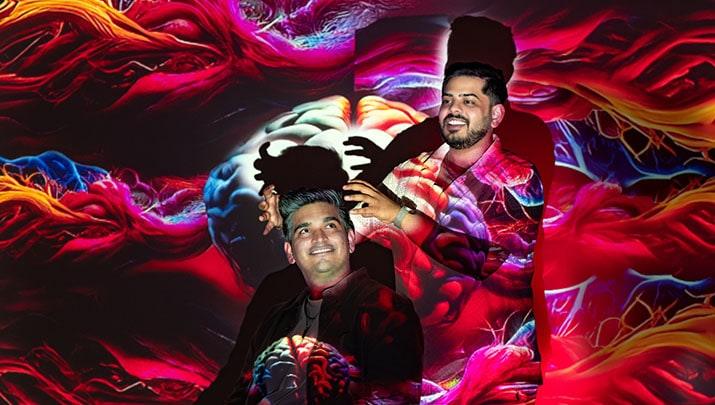
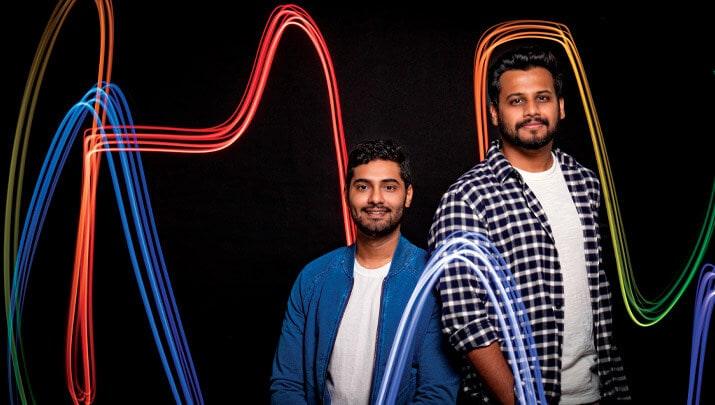
Siddhant Dangi and Deepansh Goyal did not plan to start a neurotechnology company. Their work began in a college hostel at BITS Pilani, where they lived as neighbours and spent time building hardware projects together.
They liked solving problems from scratch. Early projects included drones built for speed and control. One of these drones reached nearly 47 kilometres per hour. These projects sharpened their skills in electronics and systems design.
A single conversation changed their direction.
A Shift Toward Brain Signals
While working on engineering projects, the duo met a surgeon from the Army Hospital (Research and Referral) in New Delhi who worked on prosthetics for amputees. The discussion moved from machines to the human brain.
One project stayed with them. They built a thought-controlled bionic arm. The concept worked, but the tools behind it fell short. Devices that read brain signals were costly or unreliable.
Dangi and Goyal saw a clear gap. Brain signal tools were not built for scale or access.
Founding Nexstem
In 2020, they co-founded Nexstem. The goal was simple. Build affordable hardware that could capture brain signals with near-medical-grade accuracy.
They focused on EEG technology. EEG, or electroencephalography, records electrical activity from the brain using sensors placed on the scalp.
Launch of Nexstem V1
In 2021, Nexstem launched its first product, Nexstem V1. It was an EEG headset designed for students, researchers and developers.
The device gained early traction because it balanced cost and accuracy. It allowed users to record brain signals without lab-scale budgets.
The response shaped the company’s next step.
Expanding Beyond One Device
After Nexstem V1, the founders shifted focus. They moved from a single product to a broader system for bio-signal acquisition.
Bio signals have use across fields such as medical research, digital health, gaming and defence. Nexstem chose to support these use cases through tools rather than finished applications.
This led to the creation of a wider platform.
The Nexstem Instinct Platform
Nexstem now runs a full ecosystem called Nexstem Instinct. It includes EEG headsets with adjustable electrodes and software that helps users record, view and analyse brain data.
The platform suits research labs, academic institutes and product teams. Users can adapt it based on their needs.
The founders describe their work as access-driven. They want more people to work with brain data, not fewer.
Support From Industry
Nexstem has drawn interest from senior technology leaders. Vibhore Sharma, CTO of Info Edge and an investor in Nexstem, says the company stands out for its focus.
He notes that few startups in India work on brain–computer interfaces with global intent. Having seen the founders since their early projects, he believes Nexstem can shape future work in human–computer interaction.
Plans for Research Deployment
Over the next two years, Nexstem plans to deploy its Instinct suites across 700 neuroscience research institutes worldwide. The company also plans to expand its product range.
The focus remains on research and applied engineering rather than consumer wearables.
Dangi compares Nexstem’s long-term role to what Nvidia became for artificial intelligence. He sees Nexstem as a base layer for neurotechnology.
A Long-Term Approach
Brain–computer interface work moves slowly. Progress depends on biology, hardware and software evolving together. The founders accept this pace.
They focus on accuracy, trust and steady adoption.
For Dangi and Goyal, Nexstem is not a short sprint. It is long-term engineering work built on patience.
From a hostel room to global research labs, their path shows how focused problem-solving can move a complex field forward.
FAQs
Q1. Who founded Nexstem?
Nexstem was founded by Siddhant Dangi and Deepansh Goyal.
Q2. What does Nexstem do?
Nexstem builds hardware and software to record and analyse brain signals.
Q3. What is Nexstem V1?
Nexstem V1 is an EEG headset that captures electrical activity from the brain.
Q4. Where can Nexstem’s technology be used?
It can be used in medical research, digital health, gaming, defence and human–computer interaction.

 Arise Times