
 Sakshi Singh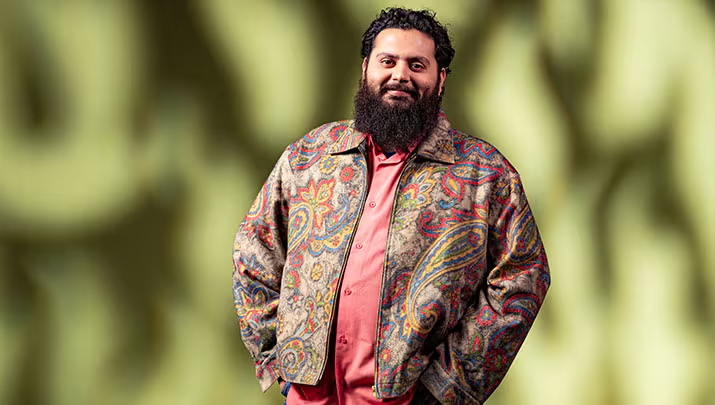
Who is Ritwik Khanna is a question gaining ground in Indian fashion and sustainability circles. At 26, Ritwik Khanna works as the creative director of Rkive City, a research-led design studio focused on reviving post-consumer textile waste. His work sits at the intersection of fashion, repair, and material reuse, at a time when the industry faces growing pressure to cut waste and reduce resource use.
Ritwik Khanna’s approach does not rely on trend cycles or large-scale production. Instead, it centres on slowing fashion down. Through hands-on methods such as repair, reuse, and deconstruction, he builds new garments from discarded ones. The aim is simple: extend the life of textiles and reduce the need for new raw materials.
Early Interest in Process Over Product
Ritwik Khanna belongs to a generation of designers shaped by climate awareness and resource limits. Rather than focusing only on surface design, he developed an interest in how garments are made, used, and discarded. This interest later shaped the foundation of Rkive City.
From the start, Khanna focused on post-consumer clothing. These are garments that have already been worn, discarded, or written off as waste. Instead of treating them as unusable, he viewed them as raw material. His work treats each piece as a record of use, damage, and history.
Rkive City and the Garment-to-Garment Method
At Rkive City, Ritwik Khanna follows what he describes as a “garment-to-garment” method. This process avoids heavy machinery and large factory systems. It relies on manual techniques such as cutting, repairing, layering, and restructuring existing clothes.
The goal is not to recycle fabric into fibre. The goal is to rebuild garments directly from garments. This approach reduces energy use and preserves material value. It also keeps visible signs of wear, such as seams, patches, and marks, as part of the design.
Khanna believes that repair and reuse should not remain hidden. In his work, these elements form the identity of each piece. No two garments look the same. Each carries traces of its past life.
Reducing Waste Through Design
One of Rkive City’s key achievements lies in waste diversion. According to the brand, it has redirected over 30,000 garments away from landfills. These pieces now exist as reconstructed clothing with higher value and longer life.
This focus on waste reduction places Rkive City within the larger movement toward circular fashion. The studio treats waste as a design resource rather than a problem. By working with what already exists, the brand reduces demand for new fabric, water use, and chemical processing.
The process also challenges how value works in fashion. At Rkive City, value comes from labour, repair, and design thinking, not from newness or volume.
Recognition at the Circular Design Challenge
Ritwik Khanna’s work gained wider attention in 2024 when Rkive City won the Circular Design Challenge. The award recognised the brand’s clear focus on reuse and its practical approach to circular systems.
The win placed Khanna among a small group of young designers working beyond surface-level sustainability claims. Judges noted the studio’s commitment to process, material honesty, and real waste reduction.
This recognition helped Rkive City reach a wider audience, including global buyers, curators, and sustainability researchers.
Milan Fashion Week Showcase
Later in 2024, Rkive City presented its reconstructed garments at Milan Fashion Week. The showcase marked an important step for the brand on an international stage.
The collection focused on rebuilt silhouettes created from discarded clothing. Instead of polished finishes, the garments showed visible joins, seams, and layers. The presentation stood apart from conventional runway collections, both in process and message.
For Khanna, the Milan showcase was not about scale. It was about placing reuse-driven design within global fashion conversations. The event signalled that circular practices can exist beyond local or experimental spaces.
A Design Practice Rooted in Restraint
Ritwik Khanna does not frame his work as a solution to all fashion waste. He presents it as one method among many. His practice focuses on restraint rather than expansion.
He avoids mass production. Each piece remains limited by available material and time. This approach keeps production slow and controlled. It also keeps the designer closely involved in each stage of making.
Khanna has said that success, for him, lies in extending the life of garments and changing how people see used clothing. If a rebuilt piece earns care and long-term use, the design has done its job.
The Road Ahead for Rkive City
As interest in circular fashion grows, Rkive City continues to operate as both a design house and a research space. The studio explores how old garments can form new systems of value, labour, and design.
Future plans include deeper research into repair techniques and expanded collaborations with waste collectors and textile workers. Growth, however, remains measured. Khanna appears more focused on depth than scale.
At 26, Ritwik Khanna represents a shift in how young designers approach fashion. His work suggests that progress may come not from faster cycles, but from slowing down and working with what already exists.
FAQs
Q1. Who is Ritwik Khanna?
Ritwik Khanna is an Indian fashion designer and the creative director of Rkive City, a design studio focused on post-consumer textile reuse.
Q2. What is Rkive City known for?
Rkive City is known for its garment-to-garment design method, which rebuilds new clothing from discarded garments without heavy machinery.
Q3. What major recognition has Ritwik Khanna received?
Rkive City won the Circular Design Challenge in 2024 and showcased its work at Milan Fashion Week.
Q4. How does Rkive City reduce fashion waste?
The brand diverts discarded garments from landfills and reconstructs them into new, high-value pieces using repair and reuse methods.