 Sakshi Singh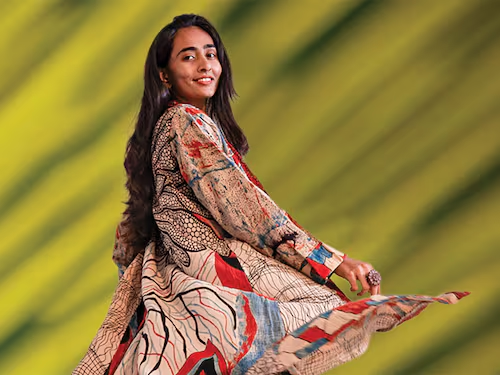
Mubassirah Khalid Khatri has become a key name in India’s craft and fashion space. At 26, she is the first woman Ajrakh artisan in three generations of her family. Her work connects traditional Ajrakh printing with modern design needs. Through her label Elysian, Mubassirah Khalid Khatri focuses on slow fashion and small-scale production.
Mubassirah Khalid Khatri comes from a family of Ajrakh printers based in Gujarat’s Kutch region. Ajrakh printing is a detailed textile process. It involves many stages of dyeing, washing and resist printing. For centuries, men controlled this craft. Women stayed away from production work. Mubassirah Khalid Khatri changed that pattern.
Early Life in a Craft Family
Mubassirah Khalid Khatri was born in Dhamadka village. In 2001, a major earthquake struck Gujarat. Her family moved to Ajrakhpur after the disaster. Ajrakhpur later became known as a global centre for Ajrakh textiles.
She grew up around natural dyes, wooden blocks and long work hours. Still, she did not plan to become an artisan at first. The craft looked demanding and rigid. Most women in her community stayed outside the printing process.
Things changed when she saw her father and brother work in new ways. After studying at Somaiya Kala Vidya, they began to mix hand painting with block printing. They tested new textures and layouts. This shift drew her interest.
Entry into Ajrakh Work
Mubassirah Khalid Khatri started with hand painting. She worked on fabric without using blocks. Her first piece took eight days to complete. She enjoyed the process. The result felt personal.
She later adapted her paintings into stoles and garments. Buyers responded well. This response gave her confidence. She saw that Ajrakh could move beyond repetition. It could carry personal ideas.
Over time, she began to combine hand painting with Ajrakh block printing. This mix allowed her to respect tradition while shaping her own design language.
Launch of Elysian
In 2021, Mubassirah Khalid Khatri launched her label Elysian. The brand focuses on handcrafted textiles. Production remains limited. Each piece follows a clear design idea.
She used social media to show her work. She did not rely on mass sales. Instead, she built direct links with buyers who value handmade clothing.
Elysian reflects her approach to fashion. She avoids excess production. She focuses on process, material and time.
Training and Skill Development
Mubassirah Khalid Khatri later joined Somaiya Kala Vidya. She completed six modules in design and business studies. The course helped her plan collections. It also helped her understand costing and pricing.
She learned how to place craft products in high-end markets. She also learned how to communicate value without changing the craft’s core.
Faculty members noted her clear design thinking. They saw her ability to create a consistent visual style. Her work avoided repetition.
Awards and Recognition
In early 2025, the Crafts Council of Telangana awarded Mubassirah Khalid Khatri the Shri Gaurav Kilaru Sanmaan for Young Artisan. The award recognised her role in bringing new ideas to Ajrakh.
In March 2025, she presented her collection Anatomy at Lakmé Fashion Week x FDCI. The show featured five artisan designers from Somaiya Kala Vidya.
Her collection showed structured garments, hand-painted details and Ajrakh prints. Live Kutchi music accompanied the show. The presentation drew attention from buyers and designers.
This appearance marked her shift from artisan to independent designer.
Role in Slow Fashion
Mubassirah Khalid Khatri works within the slow fashion model. She produces small batches. She avoids fast cycles. Her focus stays on quality and longevity.
In Kutch, many workshops aim for volume. She follows a different path. She values time and process. This choice shapes her brand identity.
Her work also reflects a wider change in Indian crafts. More women now enter design and production roles. Mubassirah Khalid Khatri stands among those leading this shift.
Future Plans
Mubassirah Khalid Khatri plans to expand Elysian beyond India. She aims to reach global platforms that support handmade textiles. She wants to keep production linked to artisan communities.
She continues to work from her roots. Ajrakh remains central to her practice. Her goal is not scale. Her goal is relevance.
Her journey shows that traditional crafts can adapt. They can stay grounded while finding new space in modern fashion.
FAQs
Q1. Who is Mubassirah Khalid Khatri?
An Indian artisan designer and the first female Ajrakh practitioner in three generations.
Q2. What is Mubassirah Khalid Khatri’s age?
She is 26 years old.
Q3. What is Elysian by Mubassirah Khalid Khatri?
A slow fashion label focused on Ajrakh block printing and hand-painted textiles.
Q4. Why is Mubassirah Khalid Khatri in the news?
She won the Shri Gaurav Kilaru Sanmaan and showcased her collection at Lakmé Fashion Week 2025.



 Arise Times