 Sakshi Singh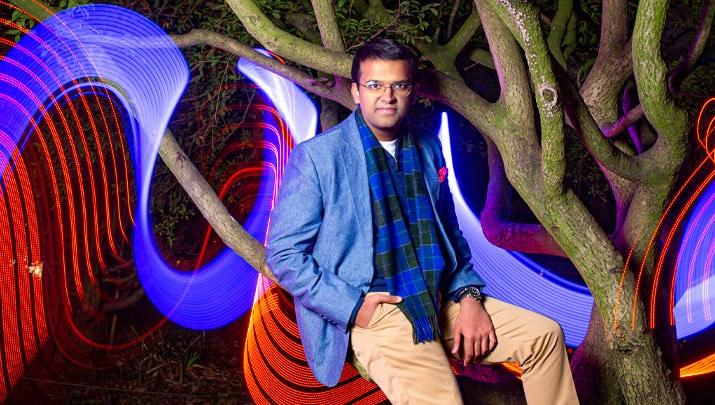
Udit Singhal, founder of Glass2Sand, is addressing India’s glass waste problem by turning discarded bottles into usable construction sand. At 21, Udit Singhal leads a social enterprise that focuses on two connected challenges: glass filling landfills and the growing demand for sand, one of the most heavily mined resources in the world after water.
Glass2Sand began as a response to a simple issue seen at home. Today, it operates across Delhi with institutional partners in India and abroad, recycling glass bottles into industry-grade, silica-rich sand.
A waste problem few noticed
Glass bottles once held value in the scrap market. Over time, prices dropped from around ₹10 per kilogram to just a few rupees. Collection became unprofitable. As a result, households began throwing glass away with regular waste.
Glass does not break down easily. It can remain in landfills for over 1,000 years. By volume, it is one of the largest contributors to landfill waste after plastic.
Udit Singhal came across this issue at 16 while looking for ways to manage glass bottles piling up at home. He began researching disposal methods and environmental impact. That research led to a clear conclusion. Glass waste needed a better use case.
From school idea to working model
Singhal’s early work turned into a small movement called “no glass in landfills.” His search for solutions took him to New Zealand, where he studied glass recycling machines that crush bottles into sand.
This exposure helped him understand how waste glass could replace mined sand in construction. His work earned a grant from the New Zealand High Commission in India, which helped support early trials.
As the idea matured, Singhal formalised the effort under Glass2Sand. He continued developing the model while pursuing his studies. He is currently a final-year student of management science at University College London.
How Glass2Sand works on the ground
Glass2Sand collects used glass bottles through a large volunteer network. Around 550 volunteers help collect bottles from homes, restaurants, offices, and institutions across Delhi and nearby areas.
The collected glass goes through recycling machines that crush it into fine sand. Initially, Glass2Sand imported equipment. Over time, Singhal shifted to a made-in-India machine that works faster and produces finer sand without sharp fragments.
The recycled sand is lab-tested and meets industry standards. It can be used in construction, especially in concrete, which depends heavily on sand.
One aim of the process is safety. The final product contains no glass shards and can be handled like regular sand.
Environmental impact so far
Glass2Sand reports that it has recycled more than 65,000 glass bottles into around 39,000 kilograms of usable sand. The process has helped avoid an estimated 270,000 kilograms of carbon emissions.
These numbers matter in a sector under strain. Sand mining affects rivers, groundwater, and ecosystems. In many regions, good-quality sand is becoming scarce.
Environmental groups say recycled glass sand can reduce pressure on natural sources if adopted at scale. It also helps manage urban waste that otherwise ends up in landfills.
Partnerships and early adoption
Glass2Sand currently runs two recycling machines in Delhi. It has partnerships with beverage and hospitality brands such as Sepoy & Co and Nirula’s, which supply used bottles for recycling.
The startup also works with institutions. It has active partnerships with 18 diplomatic missions and international institutions. These include embassies and high commissions from countries such as Chile, France, Hungary, Luxembourg, Mexico, the Netherlands, Portugal, and Spain.
Interest has also come from outside India. Countries such as Peru, the Philippines, Indonesia, Singapore, the United States, and Zimbabwe have reached out to explore the model.
Construction companies can buy the recycled sand in bulk. Samples are available online so firms can test quality before placing large orders.
Revenue with a social focus
Glass2Sand earns revenue through sand sales. Still, Singhal positions the company as a social enterprise. He says financial sustainability matters, but environmental impact comes first.
The startup uses grants and institutional support to keep costs low. It has received backing from Indian government bodies and innovation programs that support sustainability and climate-linked solutions.
Reducing manufacturing costs remains a priority so the product stays affordable for large-scale use.
Recognition and wider attention
In 2020, Udit Singhal was named one of 17 United Nations Young Leaders for the Sustainable Development Goals. The recognition highlighted his work on waste reduction and climate action.
Environmental advocates say Glass2Sand shows how waste can be treated as a resource. They also note that such projects need policy support and funding to scale across cities.
Challenges that remain
Scaling glass recycling is not simple. Glass is heavy. Transport costs are high. Collection needs coordination and public cooperation.
Awareness remains low. Many households still mix glass with general waste. Expanding beyond cities will require local partners and infrastructure.
Quality control also remains important. Construction-grade sand must meet strict standards, and testing adds cost.
Singhal acknowledges these limits. He says growth must remain controlled and aligned with environmental goals.
What lies ahead
At 21, Udit Singhal continues to balance studies with running Glass2Sand. Outside work, he is interested in design, photography, and web development.
For now, his focus remains on scaling glass recycling in a responsible way. If adopted more widely, recycled glass sand could become a common input in construction, reducing landfill load and pressure on rivers.
Glass2Sand began with a question raised at home. Its future depends on how many cities choose to treat glass waste as a resource rather than a burden.
FAQs
Q1. Who is Udit Singhal?
Udit Singhal is an Indian sustainability entrepreneur and the founder of Glass2Sand, a startup that recycles glass bottles into construction-grade sand.
Q2. What is Glass2Sand?
Glass2Sand is a social enterprise that converts waste glass bottles into silica-rich sand to reduce landfill waste and sand mining.
Q3. What is Udit Singhal’s age?
Udit Singhal is 21 years old.
Q4. How much glass has Glass2Sand recycled?
Glass2Sand has recycled over 65,000 glass bottles into about 39,000 kilograms of usable sand.

 Yash Sharma