 Sakshi Singh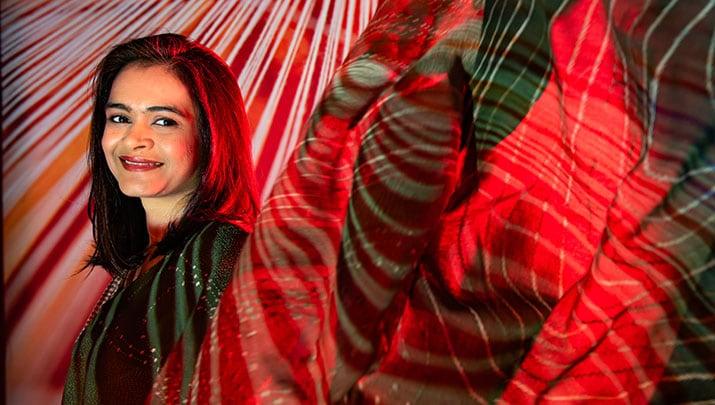
Brinda Dudhat design practice shows how craft can sit at the centre of contemporary design and architecture. At 29, Brinda Dudhat is the co-founder of Morii Design, a studio known for large-scale textile art and wall installations. Her work blends traditional Indian embroidery with abstract form. It stays rooted in villages while entering homes, galleries, and architectural spaces across the world.
Morii Design began in 2019 with a clear intent. Dudhat wanted to create one-of-a-kind textile artworks while ensuring artisans could earn steady incomes without leaving their villages. The studio now works with over 165 women artisans from 12 villages across India.
Learning to See Craft as Language
Dudhat studied at the National Institute of Design. A semester exchange in 2015 at Tama Art University in Tokyo shaped how she viewed art. She saw art as a tool for self-expression rather than ornament.
Back in India, a course on environmental perception helped her connect design with village life. Later, a craft documentation project with the Rabari pastoral community in Kutch deepened this bond. She began to see craft not as a product but as a system of memory, labour, and place.
These experiences pushed her away from fast design cycles. She wanted slower processes and deeper engagement.
A Turning Point in Bihar
In 2018, Dudhat worked on a World Bank-funded project with Rajeev Sethi, focused on reviving Sujani embroidery in Bihar. The project involved direct collaboration with women artisans.
At the end of the project, her collection was displayed at an exhibition in Delhi. The response surprised her. Visitors asked if she ran a brand. For the first time, Dudhat felt her work could sustain itself beyond academic settings.
This moment pushed her toward entrepreneurship.
Starting Morii Design on the Ground
In the summer of 2019, Dudhat travelled across villages near Bhuj on a two-wheeler. She met Jat embroidery artisans and asked them to work with her. Many refused. Trust came slowly.
After weeks of discussion, the women agreed. Dudhat promised fair wages and long-term work. That promise shaped Morii’s structure.
Later that year, with support from her friend Sonu Yadav, she registered Morii Design. The studio began with 10 to 15 artisans making cushions, bed covers, and jackets.
An early shift came by chance. Dudhat framed one embroidered jacket panel and shared it online. An architect noticed the piece and placed it in a project. That moment moved Morii toward wall art and spatial installations.
Textile Art for Architectural Spaces
Today, Morii Design focuses on textile artworks rather than products. Many pieces are custom-built for homes, hotels, and galleries. Some installations measure up to five metres by three metres.
Dudhat works with a natural palette. Earth tones dominate. Forms remain abstract. Many works resemble aerial landscapes. Climate themes run through the practice. Global warming, land use, and erosion appear as visual ideas rather than text.
Her work fits into architecture without overpowering it. Designers use Morii pieces as spatial anchors rather than decoration.
Working Across Regions and Techniques
Morii collaborates with artisans across Bihar, Gujarat, West Bengal, and other regions. Techniques include Sujani embroidery, Bela block printing, Rabari embroidery, Kutch surface work, and Kantha stitching.
Each craft stays tied to its geography. Dudhat avoids mixing techniques in ways that erase identity. Before onboarding a new artisan group, Morii conducts paid training workshops. These sessions focus on skill refinement and reviving older stitch quality seen in antique textiles.
The studio prioritises working in original craft regions. This allows artisans to remain in their villages while earning stable income.
Fair Wages and Shared Ownership
Morii Design positions artisans as collaborators, not labour. Payments remain transparent. Work timelines respect domestic responsibilities. Many artisans had never worked with designers before.
Over time, pride has returned to the craft. Women now see their work installed in galleries and architectural spaces abroad. This visibility shifts how craft is valued within communities.
From Gandhinagar to Global Galleries
Morii operates from Gandhinagar. Its work appears in select stores and galleries in India and abroad. These include The House of Things, Under the Mango Tree Gallery in Mumbai, Salon Design in Berlin, and Obakki in Canada.
In 2024, Morii held a solo exhibition in Berlin and completed an installation in Perth. These shows marked the studio’s growing international presence.
Dudhat is now building a studio and gallery near GIFT City in Gandhinagar. The space will host exhibitions, installations, and curated shows for other designers and artists.
How Mentors View Her Work
Rajeev Sethi describes Dudhat’s strength as her ability to learn from craftswomen. He notes her balance of form, texture, and colour while staying committed to tradition.
This balance defines Morii’s design language. The work does not chase trends. It evolves through process.
Design, Craft, and the Future
Brinda Dudhat’s work sits between design and architecture. It treats craft as structure, not surface. In a sector often driven by speed, Morii Design moves with care.
As architects and designers seek meaningful materials, textile art like Dudhat’s offers depth and context. Her practice shows that contemporary design can grow from villages without losing relevance.
FAQs
Q1. Who is Brinda Dudhat?
Brinda Dudhat is a 29-year-old Indian textile designer and co-founder of Morii Design.
Q2. What is Morii Design?
Morii Design is a textile art studio that creates wall art and installations using traditional Indian embroidery techniques.
Q3. How many artisans work with Morii Design?
Morii collaborates with over 165 women artisans from 12 villages across India.
Q4. Where is Morii Design’s work displayed?
Morii’s work appears in homes, galleries, and exhibitions in India, Europe, North America, and Australia.