
 Arise Times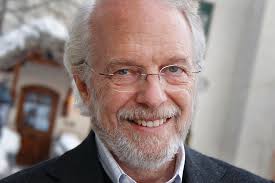
In the realm of modern computing and digital publishing, few names carry the legacy and transformative impact of John Warnock. The co-founder of Adobe Systems and the creator of the Portable Document Format (PDF), Warnock revolutionized the way people communicate, distribute, and preserve information. His innovations have not only redefined digital media but have also become foundational to how global businesses, governments, and individuals operate in the digital era.
A Pioneering Mind Born in the Age of Analog
John Edward Warnock was born on October 6, 1940, in Salt Lake City, Utah. Even as a child, he exhibited an aptitude for problem-solving and a deep curiosity for mathematics. These early interests guided him toward the University of Utah, where he earned degrees in mathematics and philosophy. Later, Warnock pursued a Ph.D. in electrical engineering and computer science under the mentorship of Ivan Sutherland, a pioneer in computer graphics. His doctoral work laid the groundwork for what would become one of the most influential careers in technology.
Xerox PARC and the Birth of Adobe
Warnock’s career trajectory shifted dramatically during his tenure at Xerox’s Palo Alto Research Center (PARC), a hub for technological innovation in the 1970s. Alongside colleague Charles Geschke, Warnock helped develop a language that could precisely describe how text and graphics should appear on a printed page—a revolutionary concept at the time. However, frustrated by Xerox’s hesitation to commercialize their work, the duo took a bold step in 1982: they left the company and co-founded Adobe Systems.
That decision would become a watershed moment for the tech industry. Their first product, PostScript, changed the face of desktop publishing. Apple’s adoption of PostScript in its LaserWriter printers in 1985 helped catalyze the desktop publishing boom, empowering users with tools previously reserved for professionals in typesetting and design.
The PDF Revolution: A Universal Language for Documents
While PostScript laid the foundation for digital printing, it was Warnock’s vision for a universal document format that cemented his legacy. In the early 1990s, he spearheaded the creation of the Portable Document Format (PDF), a file format capable of preserving a document’s layout, fonts, images, and links regardless of the device or software used to view it.
At the time, no single digital format provided reliable cross-platform document consistency. PDF addressed this challenge with elegance and efficiency. With Adobe Acrobat, users could easily create, view, and share documents across operating systems, making it an indispensable tool in government, legal, education, publishing, and corporate sectors. Today, PDFs are used to store contracts, academic papers, invoices, e-books, and even passports, making them one of the most ubiquitous digital formats globally.
A Lasting Impact on Software Innovation
Under Warnock’s stewardship, Adobe evolved into a global software powerhouse. The company didn’t stop at PDFs and PostScript—it expanded into visual creativity with flagship products like Photoshop, Illustrator, Premiere Pro, and InDesign. These tools would go on to become industry standards in design, video production, and publishing, shaping the creative output of millions around the world.
Warnock served as CEO of Adobe until 2000 and remained Chairman of the Board until 2017. During his tenure, Adobe maintained a strong culture of innovation and user-centric design—a reflection of Warnock’s belief that technology should empower creativity.
Recognitions and Philosophical Vision
Warnock’s work earned him numerous accolades, including the National Medal of Technology and Innovation in 2009, one of the highest honors for American inventors and scientists. But beyond awards, it was his philosophy that distinguished him: a belief in democratizing access to powerful tools and in preserving the integrity of information in a rapidly digitizing world.
He was not only a technologist but also a quiet philosopher of the digital age, always advocating for open systems and user control over proprietary silos. His contributions reflected a deep understanding of both technical architecture and human behavior—how people use, share, and trust information.
Conclusion: A Legacy Etched in Digital History
John Warnock passed away in August 2023, but his impact continues to reverberate across the technology landscape. The systems he designed—PostScript, PDF, and Adobe’s creative suite—remain essential tools that power workflows, storytelling, commerce, and communication across the globe.
In a world where new technologies often fade into obsolescence, Warnock’s creations have endured for decades, evolving while retaining their core purpose: to make information accessible, secure, and beautifully presented.
As the world advances into AI, blockchain, and quantum computing, the foundational ideas laid down by visionaries like John Warnock will continue to shape how we interface with the digital world. His story is a reminder that innovation with purpose can change not only industries—but also how humanity shares its ideas.


 Sakshi Singh