 Arise Times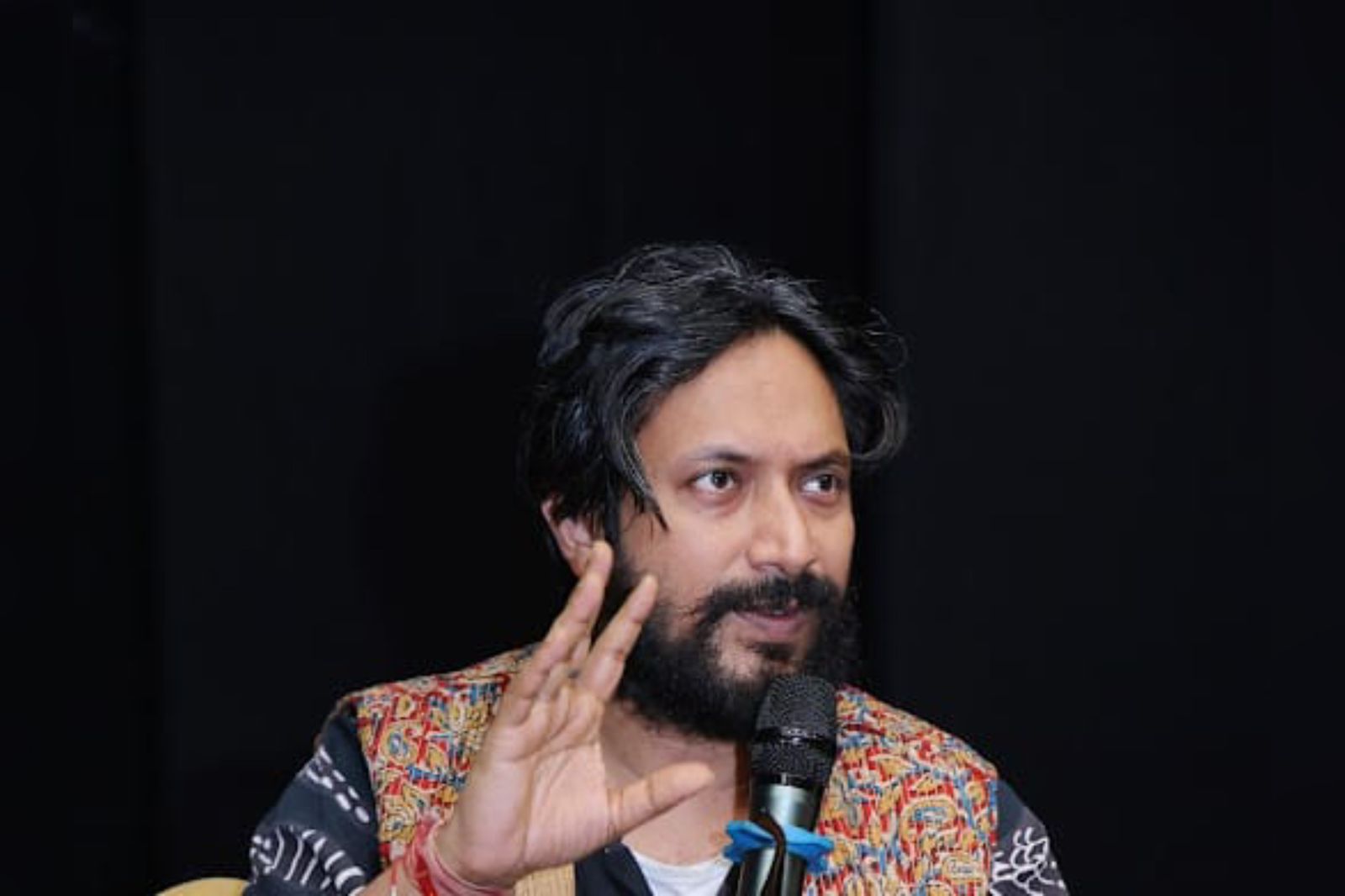
To me, the demise of Asha Bhosle signifies the “Hope of my Elder Sister.” In this war-torn world, she spreads hope through her eternal longing for love in “Salona Sajan.” Amid the darkness engulfing West Asia and the Middle East, Asha Tai evokes Macbeth’s words: “Let not light see my dark desires.” Through her melancholic and lustful “Tanha Tanha,” she illuminates humanity’s dark desires, while in A.R. Rahman’s “Kahi Aag Lage,” she cries out in fiery defiance.
To imitate human life in a futuristic world of robotics and humanoids, one must sing like Asha Bhosle, layering emotions as she did in her songs. As musicians and vocalists compete for coexistence with AI-generated voices and music, they must hum the Asha–R.D. Burman duets manifestations of soul and blood that, like power, should not be concentrated but transcended and distributed.
Asha Tai is not merely a relic of the past; she embodies hope for a dystopian future, where lust, anger, hope, love, and desire might seem utopian amid a synthetic civilisation. Her tenor, soprano, alap, meend, and operatic flourishes once echoed in our childhood imitations. Now, with her passage from mortality to immortality, she opens the doorway to “Asha and Hope” for generations to come. Her legacy and body of work will course through humanity like blood, imbuing it with vital power.

Therefore, for this vital power to sustain a future conscious state, Asha Tai and her music will blend Western Materialism and Eastern Spiritualism. For instance, the spiritual lineage of Raag Kamod in “Jaane Kya Baat Hai” from the film Sunny will mix with “Duniya Mein Logon Ko” to bring in two different dimensions of restlessness in a human soul. A soul that starts to cry out with “Jaane Ja” from the backend notes of “Yeh Jawani Yeh Deewani,” then questions a free-spirited soul and its longing through A.R. Rahman’s “Rangeela Re.” As an avid music fan of Asha Bhosle, the same “Rangeela Re” was a delight, showing the evolution of music from the “Rangeela Re Tere Man Mein” of her elder sister Lata Mangeshkar. The two songs across two time frames clearly capture how our society moved from a spiritual, soulful society to a materialistic one.
Both were contextual in their own times. While Lata’s “Rangeela Re” was about a “Brahmin” and “Kshatriya” society of Vivekananda, where culture, consciousness, and intellect flourished, Rahman’s “Rangeela Re,” through Asha Tai, brought the “Vaishya” and “Shudra” into the music. It became the music of trade, mass, people, commerce, and equality. The portrayal of the A.R. Rahman song on screen also depicted people in a free-spirited, equal, evolutionary society. Asha Tai brought it to us. In a world of discrimination and religion, she brought equality and the light of the morning like her song “Bheeni Bheeni Bhor,” through the “Raga Mian Ki Todi” and “Adha Teental.”
The rhythm of the song, which is half-filled like a cup, projects the essence of the incompletion of life and suggests that Asha Tai made us say “Dil Padosi Hai (1987).” This is because only when the heart is your known neighbour can you make a discriminatory society an equal one.
By Dr. Anandajit Goswami
(Anandajit Goswami is Professor, Director, Manav Rachna Centre for Peace and Sustainability, and Research Lead, Ashoka Centre for People-Centric Energy Transition)



 Yash Sharma