 Arise Times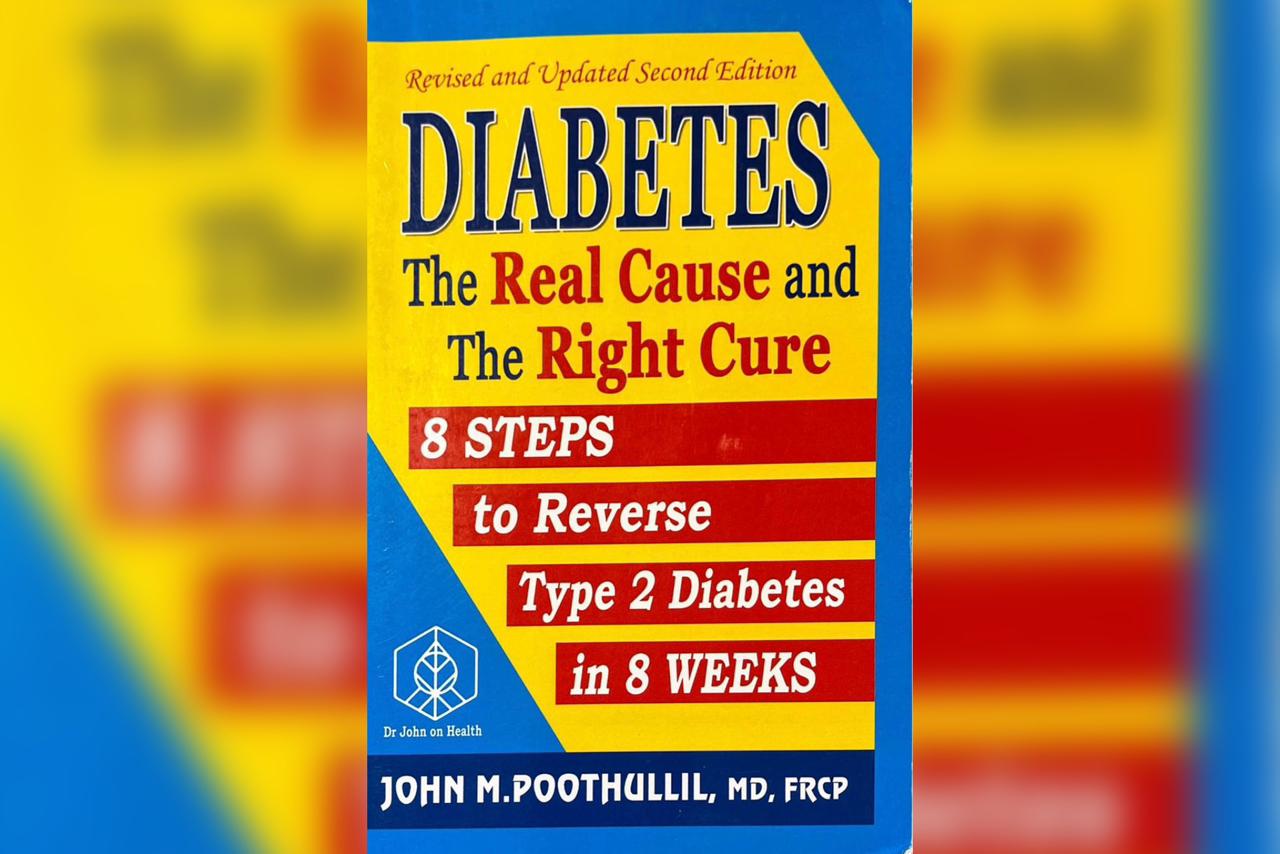
As Type 2 diabetes continues to affect millions worldwide, especially in India, discussions around its causes and management have become more urgent than ever. Against this backdrop, a detailed book review by Prof Dr Shiv Sethi has brought renewed attention to a provocative medical work titled “Diabetes – The Real Cause and The Right Cure: 8 Steps to Reverse Type 2 Diabetes in 8 Weeks”. Authored by Dr. John M. Poothullil, a retired Indian-origin physician from the United States, the book puts forward an alternative explanation for Type 2 diabetes that challenges decades of conventional medical belief.
The review presents the book not as a promotional health manual, but as a serious attempt to question the scientific foundations of how diabetes is understood and treated today.
Questioning a Long-Standing Medical Assumption
Central to this book review by Prof Dr Shiv Sethi is Dr. Poothullil’s rejection of the insulin resistance theory, which forms the basis of most modern diabetes treatments. According to this widely accepted theory, insulin becomes less effective at moving glucose into cells, causing blood sugar levels to rise.
Dr. Poothullil disputes this explanation by highlighting what he considers logical and biological gaps. He raises a fundamental question: if insulin resistance were the true cause, why would only a few types of cells stop responding to insulin while the rest continue to function normally? He also points out that diabetics do not experience muscle failure, even though muscles are said to be deprived of glucose under this theory.
Gestational diabetes is another example he uses to cast doubt on existing explanations. The condition appears abruptly during pregnancy and often disappears immediately after delivery. According to the author, this pattern weakens arguments that rely heavily on genetics or permanent hormonal dysfunction.
Diet, Not Hormones, at the Center of the Argument
After critiquing mainstream explanations, the book offers a dietary-centered theory for the development of Type 2 diabetes. As noted in the book review by Prof Dr Shiv Sethi, Dr. Poothullil argues that excessive consumption of grains such as rice, wheat, corn, and refined flours is the primary driver of the disease.
The book explains that a carbohydrate-heavy diet overloads the bloodstream with glucose. Once fat cells reach their storage capacity, excess fatty acids circulate in the blood, pushing muscle cells to burn fat instead of glucose. This metabolic shift leaves glucose unused, leading to persistently high blood sugar levels.
According to the author, this mechanism explains why diabetes is now seen in people who are not obese, physically inactive, or genetically predisposed, making it a modern dietary disease rather than a purely metabolic or hereditary one.
Eight Steps Toward Reversal
Moving beyond theory, the book lays out eight practical steps aimed at reversing Type 2 diabetes within eight weeks. Prof Dr Shiv Sethi’s review emphasizes that these steps focus almost entirely on dietary changes rather than medication.
The approach encourages reducing or avoiding grains, increasing the intake of vegetables, leafy greens, fruits, and tubers, and consuming millets in limited quantities. It also recommends daily consumption of three types of nuts and urges readers to eat in response to genuine hunger rather than habit.
The author claims that by following these steps, individuals can significantly lower their blood sugar levels without relying on long-term medication or insulin injections. This message, while hopeful, directly challenges conventional diabetes management practices.
A Message That Divides Opinion
The book review by Prof Dr Shiv Sethi acknowledges that Dr. Poothullil’s ideas may not be easy for everyone to accept. Many patients and healthcare providers are accustomed to standard treatment protocols that prioritize medication alongside diet and exercise.
There is also the question of evidence. Some readers may feel that the claims require larger-scale clinical studies to gain broader acceptance within the medical community. The review does not dismiss these concerns but frames them as part of an ongoing conversation rather than a final verdict.
What the review makes clear is that disagreement does not undermine the book’s importance. By questioning entrenched assumptions, the book encourages readers to think critically about health advice that is often accepted without scrutiny.
Accessible Writing for a Wider Audience
Another key point highlighted in the review is the book’s accessibility. Despite dealing with complex medical concepts, the language is described as simple and easy to follow. This makes it suitable not only for medical professionals but also for patients, caregivers, and anyone interested in understanding diabetes beyond standard explanations.
The book’s tone is described as empowering rather than alarming. Instead of presenting diabetes as an irreversible, lifelong condition, it suggests that informed dietary choices can play a decisive role in recovery and prevention.
An Author with a Longstanding Focus on Lifestyle Health
Dr. John M. Poothullil brings decades of medical experience to his writing. Now retired, he holds qualifications including MD and FRCP and has practiced medicine in the United States for many years. His previous works include titles such as Beat Unwanted Weight Gain, The Diabetes-Free Cookbook and Exercise Guide, Eat, Chew, Live, and Surviving Cancer.
As noted in the book review by Prof Dr Shiv Sethi, a consistent theme across his work is the belief that lifestyle, especially diet, plays a central role in most chronic diseases.
Opening the Door to a Broader Debate
In conclusion, the book review by Prof Dr Shiv Sethi positions “Diabetes – The Real Cause and The Right Cure” as a book that opens new avenues of thought rather than offering definitive answers. It invites readers to reassess their eating habits and take greater responsibility for their health, even as it challenges established medical frameworks.
For readers interested in exploring these ideas further, copies of the book can be obtained by contacting Mrs. Udaya Sri in Hyderabad at udayasuri1611@gmail.com. Whether one agrees fully or partially, the book’s central message is hard to ignore: understanding what we eat may be just as important as the medicines we take.

 Sakshi Singh