 Arise Times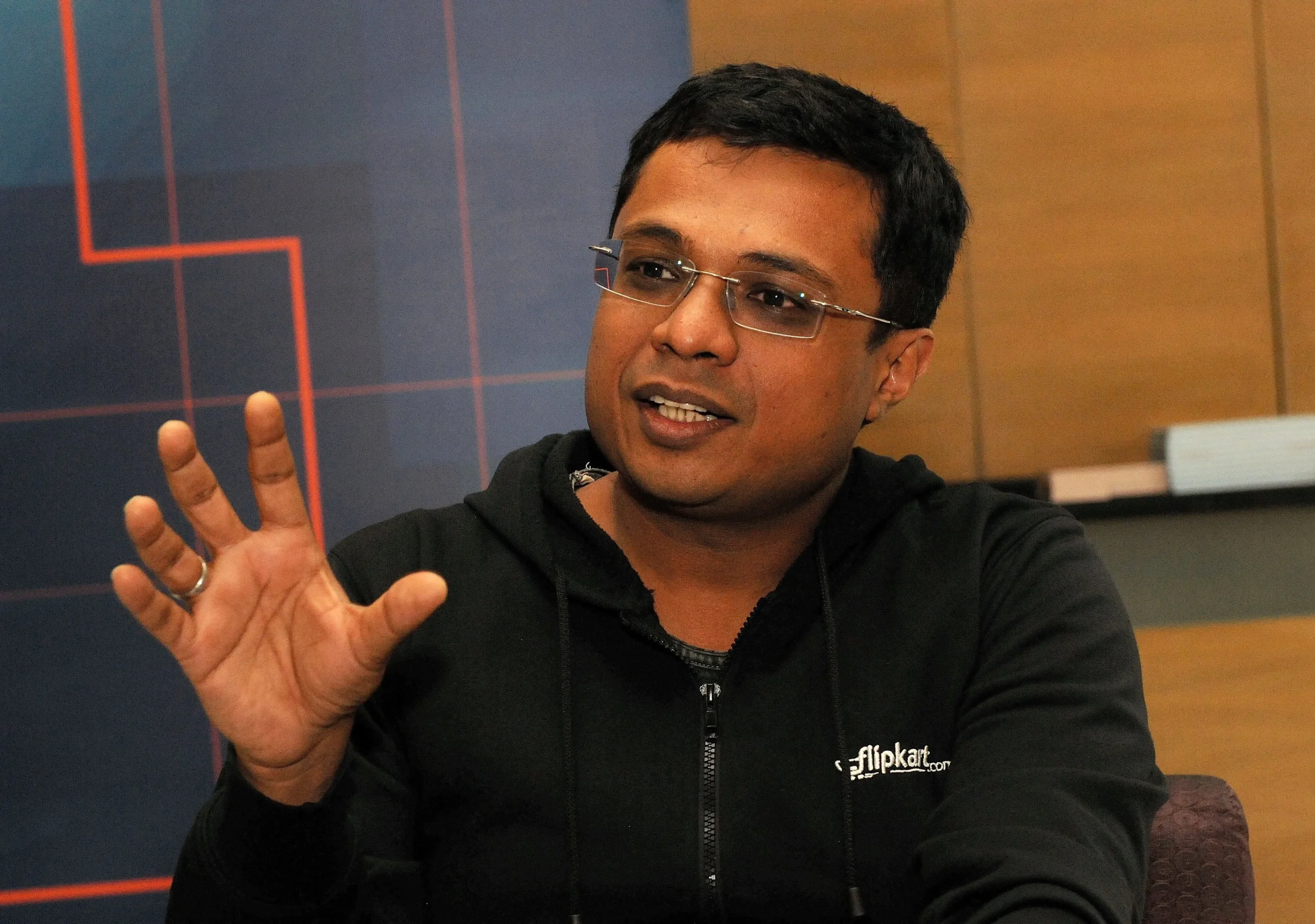
Few entrepreneurs have had as profound an impact on India’s digital economy as Sachin Bansal, the co-founder of Flipkart. From launching an online bookstore out of a modest Bengaluru apartment to leading one of India’s largest startup success stories, Bansal helped transform the country’s retail landscape and inspired a generation of entrepreneurs.
After his landmark exit from Flipkart following Walmart’s multibillion-dollar acquisition, Bansal shifted his focus to financial technology by founding Navi Technologies, continuing his mission of using technology to simplify everyday services for millions of Indians.
Today, his entrepreneurial journey is regarded as one of the defining stories of India’s startup revolution.
Early Life and Education
Sachin Bansal was born on August 5, 1981, in Chandigarh, India, into a family that valued education and academic excellence.
From an early age, he developed a strong interest in computers and technology, eventually earning admission to the Indian Institute of Technology (IIT) Delhi, where he completed a degree in Computer Science and Engineering.
During his years at IIT Delhi, Bansal deepened his understanding of software development, algorithms and internet technologies—skills that would later become instrumental in building one of India’s most influential technology companies.
Starting His Career in Technology
After graduating in 2005, Bansal began his professional career at Techspan, where he worked as a software engineer.
He later joined Amazon, gaining firsthand exposure to one of the world’s leading e-commerce businesses.
Working at Amazon gave him valuable insights into online retail, customer experience and digital commerce. More importantly, it convinced him that India’s internet market held enormous untapped potential despite the country’s limited online shopping infrastructure at the time.
The Birth of Flipkart
In 2007, Sachin Bansal resigned from Amazon and teamed up with his former colleague Binny Bansal (who is not related to him) to launch Flipkart.
The company initially operated as an online bookstore, serving customers from a small apartment in Bengaluru.
The founders handled nearly every aspect of the business themselves—from building the website and processing orders to packing books and personally delivering them to customers.
Their vision was to make online shopping reliable and convenient for Indian consumers who were still unfamiliar with e-commerce.
Challenges During the Early Years
Building an online retail business in India during the late 2000s was far from easy.
Some of the biggest obstacles included:
- Limited internet adoption
- Low consumer trust in online payments
- Weak logistics infrastructure
- Limited access to startup funding
Many customers hesitated to purchase products online due to concerns about payment security and delivery reliability.
Rather than seeing these challenges as barriers, the Flipkart founders treated them as opportunities for innovation.
Innovations That Changed Indian E-Commerce
Under Sachin Bansal’s leadership, Flipkart introduced several industry-defining innovations that reshaped India’s online retail sector.
Cash on Delivery (COD)
One of Flipkart’s most significant contributions was the introduction of Cash on Delivery (COD).
At a time when many consumers were reluctant to use online payment methods, COD allowed customers to pay only after receiving their orders.
The feature dramatically increased trust in online shopping and accelerated e-commerce adoption across India.
Big Billion Days
Flipkart also launched the Big Billion Days, one of India’s first large-scale online shopping festivals.
Inspired by global retail events such as Black Friday, the annual sale encouraged millions of consumers to embrace digital shopping through deep discounts and promotional offers.
The event has since become one of India’s largest online retail festivals.
Building Ekart Logistics
Recognizing that delivery was critical to customer satisfaction, Flipkart invested heavily in developing Ekart, its in-house logistics network.
Ekart helped the company:
- Improve delivery speeds
- Expand nationwide reach
- Enhance order tracking
- Maintain greater control over customer experience
The logistics network became a major competitive advantage as Flipkart expanded across the country.
Strategic Acquisitions
As Flipkart grew beyond books into electronics, fashion and general merchandise, it strengthened its position through strategic acquisitions.
Some of its notable acquisitions included:
- Myntra (2014), expanding its fashion business.
- Jabong (2016), further strengthening its presence in online fashion retail.
- PhonePe (2016), marking its entry into India’s rapidly growing digital payments ecosystem.
These acquisitions helped transform Flipkart into a diversified digital commerce platform.
Becoming One of India’s Most Valuable Startups
Within less than a decade, Flipkart evolved into one of India’s highest-valued technology companies.
By 2016, the company had achieved a valuation exceeding $15 billion, becoming one of the flagship success stories of India’s startup ecosystem.
Its growth demonstrated that Indian entrepreneurs could build globally competitive technology companies capable of challenging multinational giants.
Walmart’s Historic Acquisition
In 2018, global retail giant Walmart acquired a 77% stake in Flipkart in a deal valued at approximately $16 billion.
The transaction remains one of the largest acquisitions in the history of India’s startup ecosystem.
The deal had far-reaching implications:
- It validated Flipkart’s business model on the global stage.
- It increased international investor confidence in Indian startups.
- It highlighted India’s growing importance in global e-commerce.
Following the acquisition, Sachin Bansal exited Flipkart by selling his stake and stepping down from the company he had co-founded more than a decade earlier.
Although his departure marked the end of an era, his influence on Flipkart’s growth continues to shape the company.
Building Navi Technologies
After leaving Flipkart, Bansal turned his attention to financial technology.
In 2018, he acquired a controlling stake in Chaitanya Rural Intermediation Development Services (CRIDS), which was later rebranded as Navi Technologies. Under the Navi brand, the company expanded into digital financial services, offering products such as:
- Personal loans
- Health insurance
- Home insurance
- Mutual fund investments
- UPI-based digital payments
Navi’s objective is to simplify financial services through technology and make credit, insurance and investments more accessible to individuals across India.
Investing in India’s Startup Ecosystem
Beyond building his own companies, Sachin Bansal has become an active investor in India’s startup ecosystem.
His investments span sectors including:
- Financial technology
- Electric mobility
- Artificial intelligence
- Consumer technology
Companies associated with his investment portfolio include:
- Ola
- Ather Energy
- UGro Capital
Through these investments, Bansal continues to support entrepreneurs developing innovative solutions across multiple industries.
Leadership Lessons
Sachin Bansal’s entrepreneurial journey offers several valuable lessons for aspiring founders.
Customer Trust Drives Growth
Flipkart’s success was built on understanding consumer concerns and introducing solutions such as Cash on Delivery that increased confidence in online shopping.
Infrastructure Matters
Building Ekart demonstrated that scalable businesses require strong operational foundations, not just innovative products.
Continuous Innovation Creates Competitive Advantage
Rather than competing solely on price, Flipkart consistently introduced new services, technologies and business models to differentiate itself in a rapidly evolving market.
Reinvention Is Essential
After successfully building Flipkart, Bansal entered an entirely different industry with Navi, demonstrating the importance of adapting to new opportunities.
A Lasting Legacy
Sachin Bansal’s contributions extend far beyond the companies he has founded.
His work has helped:
- Accelerate India’s digital commerce revolution.
- Inspire thousands of entrepreneurs to launch startups.
- Attract global investment into India’s technology sector.
- Expand access to digital financial services.
Flipkart’s success also proved that Indian startups could compete with international corporations while building products tailored to local market needs.
Looking Ahead
As India’s digital economy continues to evolve, Sachin Bansal remains one of its most influential entrepreneurs.
Through Navi Technologies and his growing investment portfolio, he continues to support innovation in financial services and emerging technologies.
His journey—from building an online bookstore to creating one of India’s largest startup success stories and then entering fintech illustrates how vision, persistence and customer-focused innovation can transform entire industries.
For aspiring entrepreneurs, Sachin Bansal’s career stands as a powerful reminder that solving real-world problems with technology can create businesses that redefine markets and inspire future generations.
Most Searched FAQs
1. Who is Sachin Bansal?
Sachin Bansal is an Indian entrepreneur, the co-founder of Flipkart and the founder of Navi Technologies. He is regarded as one of the pioneers of India’s e-commerce industry.
2. When was Flipkart founded?
Flipkart was founded in 2007 by Sachin Bansal and Binny Bansal as an online bookstore before expanding into one of India’s largest e-commerce platforms.
3. Why is Cash on Delivery considered Flipkart’s biggest innovation?
Cash on Delivery helped overcome consumer distrust of online payments, encouraging millions of Indians to shop online and accelerating the growth of e-commerce in the country.
4. What happened after Walmart acquired Flipkart?
In 2018, Walmart acquired a 77% stake in Flipkart for approximately $16 billion. Following the acquisition, Sachin Bansal exited the company by selling his shares.
5. What is Navi Technologies?
Navi Technologies is a fintech company founded by Sachin Bansal that offers digital financial services, including loans, insurance, investment products and digital payment solutions.
6. Which startups has Sachin Bansal invested in?
Sachin Bansal has invested in several Indian startups across fintech and mobility sectors, including Ola, Ather Energy, and UGro Capital.
Read also: Vipul Pore: How a Mumbai Tech Entrepreneur is Redefining E-commerce Development in India


 Yash Sharma