 Arise Times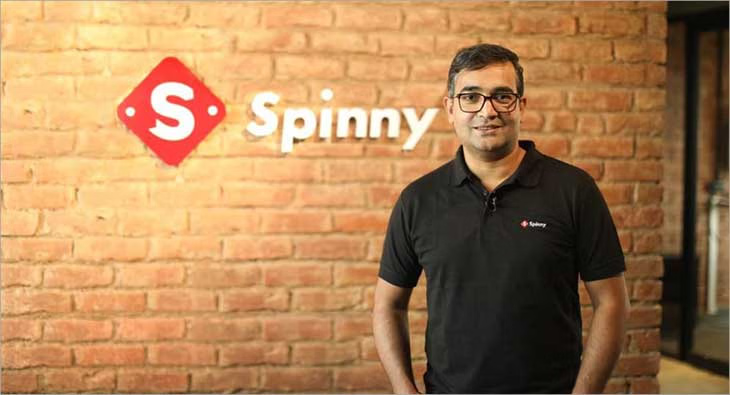
Used car marketplace Spinny has raised $131 million in a new funding round led by the Accel Leaders Fund, reinforcing investor confidence in India’s expanding pre-owned vehicle market. The Gurugram-based startup is expected to reach a post-money valuation of around $1.5 billion following the investment.
The round combines fresh capital with secondary transactions, providing funds for business expansion while also offering liquidity to employees and early investors. The latest investment comes as demand for certified used cars continues to rise across India.
Funding Round Includes Primary and Secondary Capital
Spinny secured $110 million in primary funding, while an additional $21 million came through secondary transactions.
The secondary component includes employee stock ownership plan (ESOP) buybacks and partial exits for some early investors.
Among the participants, Accel Leaders Fund invested $75 million, making it the largest contributor in the round.
Existing investors also participated, including:
- Elevation Capital
- Tiger Global
- Fundamentum Partnership
According to regulatory filings, Accel Leaders Holdings invested nearly $49 million, while Fundamentum Partnership contributed $3 million.
The funding reflects continued backing from long-term investors who have supported the company’s growth over several years.
Building a Full-Stack Used Car Business
Spinny operates a full-stack marketplace for certified pre-owned vehicles.
Unlike marketplace models that simply connect buyers and sellers, Spinny manages much of the transaction process itself. Its operations include:
- Vehicle sourcing
- Multi-point inspections
- Refurbishment and reconditioning
- Documentation
- Financing assistance
- Delivery
- After-sales support
This integrated approach gives the company greater control over vehicle quality and customer experience, two factors that remain important for buyers entering the used car market.
Monthly Sales Continue to Grow
The company has expanded its operations significantly in recent years.
According to people familiar with the business, Spinny currently sells around 7,000 vehicles each month through its consumer platform.
Its business-to-business auction platform handles an additional 5,000 vehicles every month.
With an average selling price of approximately ₹6 lakh per vehicle, the company has built substantial transaction volumes across multiple cities.
Industry observers say the company’s ability to oversee every stage of the customer journey has helped establish trust among buyers, particularly in Tier 1 and Tier 2 markets.
Fresh Capital to Support Expansion
The newly raised capital is expected to support the company’s next phase of growth.
People familiar with the matter said the investment will be used to strengthen:
- Technology infrastructure
- Logistics operations
- Warehousing capacity
- Customer service
- Expansion into new cities
Spinny is also expected to continue investing in digital tools that improve vehicle pricing, inspection, and inventory management.
These investments are intended to improve operational efficiency while supporting larger transaction volumes.
Riding India’s Growing Used Car Market
India’s pre-owned vehicle industry has grown steadily over the past few years.
Several factors have contributed to rising demand, including:
- Higher prices for new vehicles.
- Greater affordability of used cars.
- Increased preference for personal mobility after the Covid-19 pandemic.
- Better financing options.
- Growing consumer confidence in certified vehicles.
Industry estimates project the Indian used car market to expand from around $23 billion in 2023 to nearly $50 billion by 2028.
As the organised segment grows, companies offering inspection, certification, and warranty services are expected to benefit.
Financial Performance Shows Operational Improvement
Spinny has also reported improvements in its financial performance.
For the financial year ending March 2024, the company recorded operating revenue of ₹3,725.02 crore, compared with ₹3,259.78 crore in the previous financial year.
At the same time, the company reduced its losses by 28%, bringing the figure down to ₹590.37 crore.
The combination of higher revenue and narrower losses suggests progress toward improving operational efficiency despite broader economic challenges.
Market analysts view these improvements as an indication that the company is moving toward a more sustainable business model.
Strong Investor Support Continues
According to startup intelligence platform TheKredible, Spinny has raised more than $500 million since its inception.
Its largest institutional shareholders remain:
- Tiger Global, with approximately 14.25%
- Accel, with around 13.25%
The continued participation of existing investors in the latest funding round signals confidence in the company’s long-term strategy and execution.
IPO Speculation Gains Momentum
Industry observers increasingly view Spinny as a potential candidate for a public listing.
The company’s improving financial performance, expanding customer base, and operational scale have led some analysts to suggest that an initial public offering could become a possibility within the next 24 to 36 months.
Although the company has not announced any IPO plans, improvements in unit economics and repeat customer rates have strengthened its position among India’s late-stage technology startups.
Competition in the Used Car Segment
Spinny operates in a competitive market alongside companies such as Cars24 and CarDekho.
Each platform is investing in technology, financing, and customer experience as competition intensifies.
Spinny differentiates itself through its full-stack operating model, which allows it to manage vehicle quality and ownership transfers internally instead of relying primarily on third-party dealers.
This strategy has helped the company position itself as a trusted brand in the certified used car segment.
Focus on Technology and Customer Experience
Looking ahead, Spinny is expected to continue investing in artificial intelligence and automation.
Areas of focus include:
- AI-driven vehicle pricing.
- Automated inspection systems.
- Inventory optimisation.
- Digital customer experiences.
The company is also expected to expand its network of physical experience centres while exploring additional services such as extended warranties, insurance products, and subscription-based vehicle ownership.
These initiatives could help increase customer retention and diversify revenue streams.
Outlook
The latest funding round strengthens Spinny’s position at a time when India’s organised used car market is attracting increasing investor attention.
With fresh capital, continued backing from existing investors, and improving financial performance, the company is preparing for its next stage of expansion.
As competition intensifies and consumer expectations continue to evolve, Spinny’s ability to maintain operational discipline, strengthen customer trust, and scale efficiently will play a key role in shaping its future growth.
Most Searched FAQs
1. How much funding has Spinny raised?
Spinny has raised $131 million in its latest funding round led by Accel Leaders Fund, taking its total funding to more than $500 million.
2. What is Spinny’s valuation after the new funding?
The latest investment is expected to value Spinny at approximately $1.5 billion on a post-money basis.
3. Who invested in Spinny’s latest funding round?
The round was led by Accel Leaders Fund and included participation from existing investors such as Tiger Global, Elevation Capital, and Fundamentum Partnership.
4. How many cars does Spinny sell every month?
Spinny sells around 7,000 vehicles each month through its consumer platform and another 5,000 vehicles through its B2B auction business.
5. What is Spinny’s business model?
Spinny operates a full-stack marketplace for certified used cars, managing sourcing, inspections, refurbishment, documentation, financing, delivery, and after-sales support.
6. Is Spinny planning an IPO?
Spinny has not officially announced an IPO. However, industry analysts consider the company a potential public listing candidate over the next few years due to its growth and improving financial performance.
Read also: Kunal Shah and CRED: A Clear Look at India’s Fintech Growth Story

 Yash Sharma